Understanding Teeth Whitening
Teeth whitening has become a popular cosmetic procedure, with countless individuals seeking brighter, more radiant smiles. The process involves removing stains and discoloration from the enamel, the outermost layer of the tooth. This can be achieved through various methods, ranging from professional treatments administered by dentists to over-the-counter products and DIY techniques. The effectiveness of each method varies, and it’s essential to understand the underlying principles to make informed decisions about your oral health. Teeth whitening aims to restore the natural color of your teeth or lighten them beyond their original shade, boosting confidence and enhancing the overall appearance of your smile.
What Causes Teeth Discoloration
Teeth discoloration can stem from a variety of factors, both intrinsic (internal) and extrinsic (external). Understanding the causes of discoloration is crucial to determine the most effective whitening approach. External stains occur on the surface of the teeth and are often caused by the consumption of staining foods and beverages. These include coffee, tea, red wine, and certain fruits and vegetables like berries. Smoking and tobacco use are also significant contributors to external staining. Intrinsic stains, on the other hand, originate from within the tooth structure. These can result from aging, certain medications (like tetracycline), excessive fluoride intake, or trauma to the tooth. Recognizing the type of discoloration helps in selecting the appropriate whitening method.
Common Causes

Common causes of teeth discoloration encompass a range of lifestyle choices and health conditions. Dietary habits play a significant role, with frequent consumption of coffee, tea, and red wine leading to the accumulation of stains over time. Smoking and tobacco use are notorious for causing severe discoloration and damaging oral health. Poor oral hygiene, including infrequent brushing and flossing, allows stains to build up and darken teeth. Certain medications, such as tetracycline antibiotics, can cause intrinsic staining if taken during tooth development. Additionally, aging naturally causes teeth to yellow as the enamel thins and the underlying dentin darkens.
How Baking Soda Works for Whitening
Baking soda, also known as sodium bicarbonate, is a mild abrasive that can help remove surface stains from teeth. It works by gently scrubbing away the discolored particles that accumulate on the enamel. While baking soda doesn’t change the intrinsic color of your teeth, it can effectively remove extrinsic stains caused by food, drinks, and smoking. Its abrasive properties can help polish the tooth surface, making it appear brighter. It’s important to note that baking soda’s effectiveness varies depending on the type and severity of the stains. It’s often used as a home remedy for teeth whitening and can be a cost-effective option for those looking to improve their smile.
The Science Behind Baking Soda
The science behind baking soda’s whitening effect lies in its physical and chemical properties. As a mild abrasive, baking soda helps to physically remove surface stains by scrubbing them away. This abrasive action is gentle enough not to damage the enamel when used correctly. Furthermore, baking soda has a slightly alkaline pH, which helps to neutralize acids in the mouth. This is beneficial because acids can erode enamel, making teeth more susceptible to stains. Although baking soda doesn’t contain bleaching agents, its ability to remove stains and create a less acidic environment contributes to a brighter appearance of the teeth.
Baking Soda’s Role in Whitening

Baking soda plays a crucial role in the DIY teeth whitening process by acting as a gentle cleaning agent. It helps to remove surface stains caused by coffee, tea, and other staining agents, which can build up over time and dull the appearance of your teeth. The fine particles in baking soda act as a mild abrasive, effectively polishing the enamel surface and breaking down stain molecules. When mixed with water or other ingredients, it creates a paste that can be applied to the teeth. Regular but cautious use of baking soda can contribute to a noticeable improvement in the brightness of your smile.
The Power of Hydrogen Peroxide
Hydrogen peroxide is a chemical compound with bleaching properties, making it a popular ingredient in teeth whitening products. It works by penetrating the enamel and breaking down the stain molecules that cause discoloration. This oxidation process helps to lighten the intrinsic color of the teeth, resulting in a brighter smile. The concentration of hydrogen peroxide varies in different whitening products, with higher concentrations often used in professional treatments. When used in the correct concentrations, hydrogen peroxide can effectively remove both surface and deeper stains. It’s essential to follow instructions carefully and be mindful of potential side effects.
How Peroxide Whitens Teeth
Hydrogen peroxide whitens teeth through an oxidation process. When applied to the tooth surface, it releases oxygen molecules that penetrate the enamel. These oxygen molecules react with the stain molecules, breaking them down into smaller, less visible particles. This process not only removes existing stains but also lightens the overall color of the tooth. The effectiveness of hydrogen peroxide depends on its concentration and the duration of exposure. Higher concentrations and longer exposure times can lead to more significant whitening but also increase the risk of side effects. This is why professional treatments often use stronger concentrations under controlled conditions.
The Role of Peroxide in Whitening

Hydrogen peroxide plays the primary role in the whitening process. As a bleaching agent, it’s responsible for the actual lightening of the tooth enamel. It breaks down the stain molecules, which removes both surface and deeper stains. The peroxide’s concentration dictates its effectiveness, with higher concentrations typically used in professional treatments. The concentration and application method determine the final result. Peroxide is often used in combination with other ingredients, such as baking soda, to enhance its whitening effects and provide a more comprehensive approach to teeth whitening. However, it is crucial to use it with caution and follow instructions carefully to minimize potential risks.
How to Whiten Teeth with Baking Soda and Peroxide
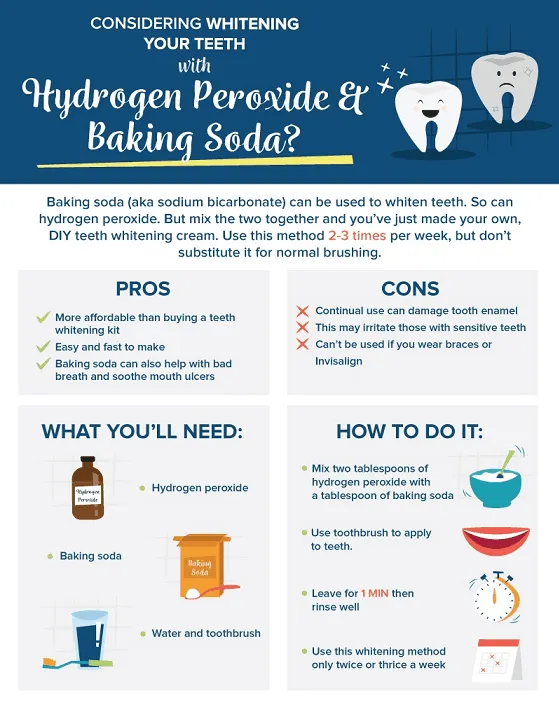
Combining baking soda and hydrogen peroxide can be a simple and effective way to whiten your teeth at home. The baking soda acts as a mild abrasive, removing surface stains, while the hydrogen peroxide provides the bleaching action. It’s important to use the correct ratio of ingredients and follow a specific application process to ensure safety and effectiveness. However, before trying this method, it’s wise to consult with your dentist to determine if it’s suitable for your teeth and oral health condition. This DIY method might not be suitable for all types of stains or tooth sensitivities.
Step-by-Step Guide
Follow these steps to safely and effectively use baking soda and hydrogen peroxide for teeth whitening. First, prepare your teeth by brushing them gently to remove any loose debris. Next, create the whitening paste by mixing one tablespoon of baking soda with two tablespoons of hydrogen peroxide. Apply the paste to your teeth, ensuring even coverage. Let the paste sit on your teeth for about two minutes. Rinse your mouth thoroughly with water, and brush your teeth again to remove any remaining paste. Repeat this process no more than once a week to avoid damaging your enamel. If you experience any sensitivity or discomfort, discontinue use immediately. It is important to note that this is an at-home method, and results may vary.
Preparing Your Teeth for Whitening

Preparing your teeth before using baking soda and peroxide is essential for optimal results and to minimize potential risks. Begin by thoroughly brushing your teeth to remove any plaque or food particles. Floss gently to remove debris between your teeth. Ensure that your teeth are relatively clean and free from surface buildup before applying the whitening paste. Consider using a soft-bristled toothbrush to avoid excessive abrasion. A clean surface allows the whitening agents to work more effectively. It is also beneficial to rinse your mouth with water before applying the paste.
Creating the Whitening Paste
Creating the whitening paste involves mixing baking soda and hydrogen peroxide in the correct ratio. Usually, a common recipe involves mixing one tablespoon of baking soda with two tablespoons of hydrogen peroxide. Mix these ingredients in a small bowl until you get a thick, paste-like consistency. Adjust the proportions if needed to achieve the desired consistency. Ensure that the mixture is homogenous and well-blended. Avoid adding too much hydrogen peroxide, as it could increase the risk of sensitivity. Freshly prepare the paste each time you use it. Remember to use food-grade hydrogen peroxide.
Applying the Paste to Your Teeth
Applying the paste to your teeth requires precision to maximize effectiveness and minimize risks. After preparing the paste, use a soft-bristled toothbrush or your finger to apply a thin, even layer to your teeth. Ensure all surfaces are covered, especially those with visible stains. Avoid getting the paste on your gums or soft tissues, as it could cause irritation. Gently brush your teeth with the paste for about two minutes, using a circular motion. Be cautious and avoid excessive scrubbing, which could damage the enamel. After brushing, let the paste sit for about a minute. If you experience discomfort, stop immediately and rinse your mouth.
Rinsing and Aftercare

Rinsing and proper aftercare are crucial steps after using the baking soda and peroxide paste. After letting the paste sit for a short time, thoroughly rinse your mouth with water to remove all traces of the mixture. Brush your teeth again with regular toothpaste to remove any remaining baking soda or peroxide. This helps to ensure a clean mouth and neutralizes the alkaline effects of baking soda. Avoid eating or drinking for at least 30 minutes after rinsing to allow the enamel to re-mineralize. It’s important to follow this process no more than once a week to prevent damaging your enamel. If you experience any sensitivity, discontinue use and consult your dentist.
Important Safety Considerations
Before attempting to whiten your teeth with baking soda and peroxide, it’s crucial to understand the potential risks and safety precautions. Overuse or improper application can lead to enamel erosion, tooth sensitivity, and gum irritation. Always use food-grade hydrogen peroxide and follow the instructions precisely. Consult with your dentist before trying this method, especially if you have sensitive teeth, gum disease, or any other existing dental issues. Be aware of the potential side effects, and discontinue use if you experience any adverse reactions. If you’re unsure or uncomfortable, consider alternative whitening methods that are professionally supervised. Remember, oral health is paramount.
Potential Risks and Side Effects
Using baking soda and hydrogen peroxide for teeth whitening carries potential risks and side effects that should be considered. Overuse can lead to enamel erosion, making your teeth more vulnerable to cavities and sensitivity. Some individuals may experience temporary tooth sensitivity or gum irritation. If the solution is too strong or applied incorrectly, it could cause chemical burns on the gums. The results are also not guaranteed, and the DIY method might not be as effective as professional treatments for severe stains. Discontinue use if you experience any pain, discomfort, or other adverse reactions. Consult your dentist if these side effects persist.
Who Should Avoid This Method

Certain individuals should avoid using baking soda and hydrogen peroxide for teeth whitening. Those with sensitive teeth or a history of enamel erosion are at higher risk of experiencing adverse effects. People with gum disease or any other existing oral health issues should consult their dentist before trying this method, as the ingredients could worsen their condition. Individuals with dental restorations, such as fillings, crowns, or veneers, should also be cautious, as the whitening agents might not affect these materials. Children and pregnant women should consult with a dentist before considering any teeth whitening treatments. Ultimately, it’s best to consult your dentist.
Other Teeth Whitening Options
Apart from the DIY method of using baking soda and peroxide, there are several other teeth whitening options available, each with its own benefits and drawbacks. These options range from over-the-counter products, such as whitening toothpastes, strips, and gels, to professional treatments performed by dentists. The best choice depends on your needs, budget, and the severity of your discoloration. Consulting with a dentist will help you to explore all the options and select the most suitable and effective way to achieve a brighter smile.
Professional Whitening Treatments
Professional teeth whitening treatments offer the most effective and reliable way to achieve a significantly brighter smile. Dentists use high-concentration bleaching agents, often with the aid of special lights or lasers, to accelerate the whitening process. In-office treatments provide immediate results and are performed under controlled conditions, reducing the risk of side effects. Dentists also offer custom-fitted whitening trays for at-home use, providing a more personalized approach. Professional treatments are ideal for individuals with severe staining or those seeking dramatic results. They also ensure that the process is safe and effective, under the supervision of a dental professional.
Over-the-Counter Whitening Products

Over-the-counter (OTC) teeth whitening products provide a more accessible and affordable alternative to professional treatments. These products include whitening toothpastes, strips, and gels, readily available at pharmacies and stores. Whitening toothpastes typically contain mild abrasives and bleaching agents to remove surface stains. Whitening strips and gels contain higher concentrations of bleaching agents and are designed to be applied directly to the teeth. While these products can be effective for mild to moderate staining, the results may not be as dramatic as those achieved with professional treatments. It’s essential to follow instructions carefully and be aware of potential side effects.